The signs worth acting on in Kansas City are recurring moisture on steel, HVAC loads rising with no change in operations, drafts at transitions, and insulation that has sagged or been crushed. Given the continental mixed climate, roof-deck condensation dripping onto racking and packaged goods is what most often brings us out.
What actually degrades over time
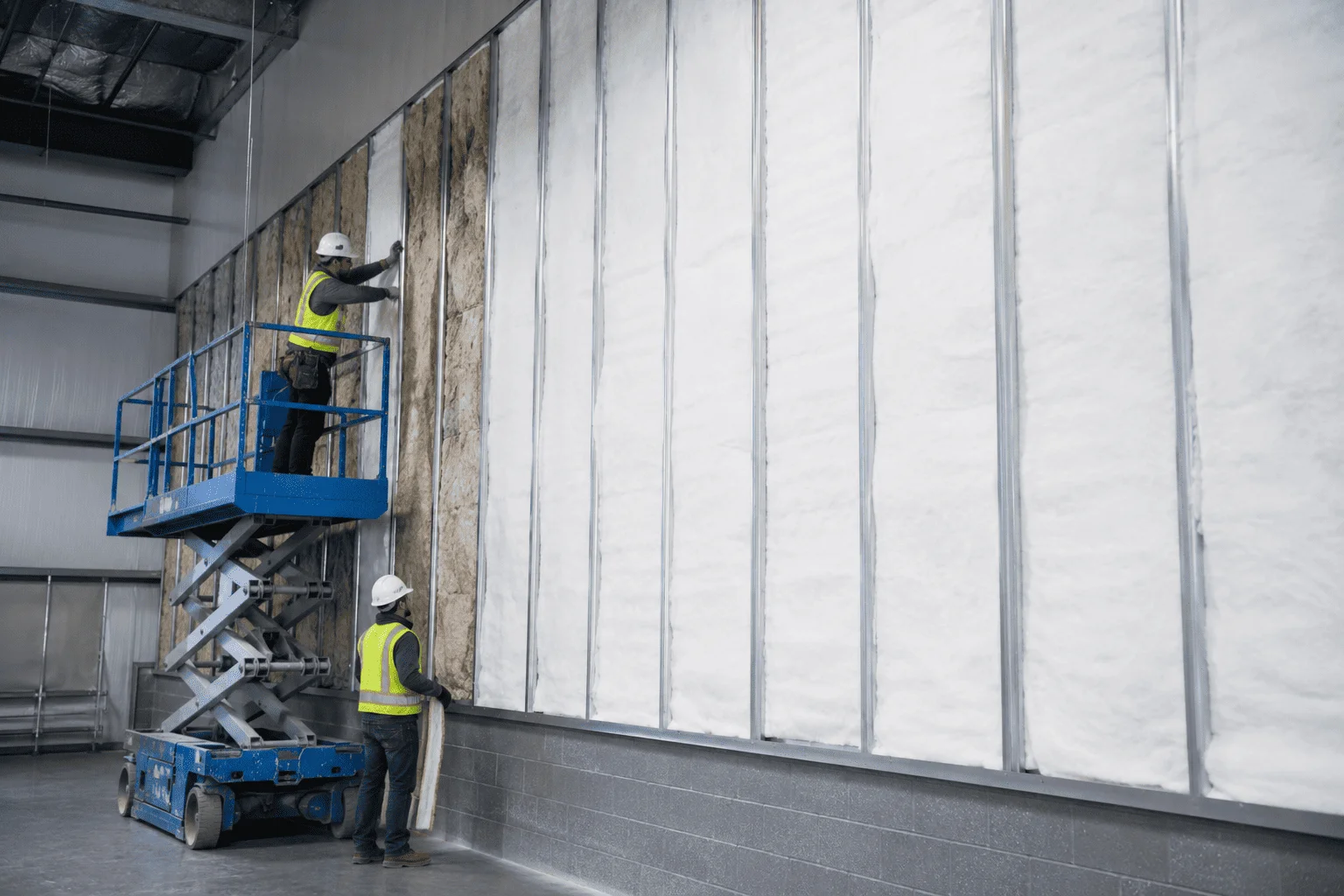
Most commercial insulation degrades quietly. Water finds it, air moves through it, forklifts and trades knock it about, and it settles under its own weight. By the time a problem is obvious the assembly has usually been underperforming for years.
What this looks like in Kansas City
In Kansas City the pattern has a local accent. The continental mixed climate makes wide seasonal temperature swings the leading envelope concern, and with a building stock shaped by a rail, logistics, and manufacturing center on the Kansas side, the failure we are called about most often in high-bay distribution space is roof-deck condensation dripping onto racking and packaged goods. A major rail and freight position drives high-bay warehouse and industrial envelope work. Buildings running rail logistics and manufacturing operations tend to show it first, because the loads are constant and the consequences are visible on the floor.
Five signs worth acting on
- Energy loads climbing without an operational reason. When HVAC runtime and demand rise while production and occupancy hold steady, the envelope is generally where it is going.
- Condensation and staining. If moisture returns in the same spots after every humid stretch, the assembly is not managing vapor. In Kansas City this shows up early on rail and intermodal logistics facilities and distribution and fulfillment warehouses.
- Displaced or crushed insulation. Trade traffic and equipment take a steady toll in high-bay distribution space. Compressed material has lost most of its value even where it is still technically present.
- Drafts where assemblies meet. Air movement at eaves, joints, and penetrations means the barrier is discontinuous, which no amount of extra equipment capacity will fix.
- Anything after a leak, flood, or trade damage. Wet material rarely recovers. It holds moisture against the assembly and needs removal rather than drying in place.
How far the work needs to go
Localized damage often needs nothing more than repair and re-sealing. Widespread degradation, contamination, or moisture damage usually means removal and replacement with a system matched to the assembly. The distinction matters because replacing a whole envelope when a transition detail failed is expensive and does not fix the cause.
How we work out the scope
We start where the symptoms are, then check whether the cause sits somewhere else in the assembly. Access matters as much as area in high-bay distribution space, because reaching a high deck changes both method and schedule. What comes back to you lists the removal, the system going in, the coverage, and how the work is staged.
If you manage buildings beyond Kansas City, the same symptoms read the same way in Wichita, though exposure and building age differ enough that each site is worth checking on its own.
Related pages
Frequently asked questions
Is repair enough, or do I need full replacement?+
Localized damage with a known cause can often be repaired and re-sealed. Widespread or moisture-related degradation calls for removal and replacement with a system matched to the assembly.
Why does condensation keep forming on our metal building?+
Warm humid air meets cold steel and gives up its moisture. In Kansas City's climate that is usually a missing or failed continuous insulation and vapor strategy, and closed-cell foam or a proper metal-building system is what resolves it.
Do you handle removal and disposal?+
Yes. Degraded or contaminated material is removed under containment and disposed of, then the new system goes in as part of the same job.
Can the work happen while we stay operational?+
Usually. Work in high-bay distribution space is phased, zones are isolated, and we coordinate with your facility and safety teams so rail and intermodal logistics facilities keep running. That phasing is in the schedule, not hidden in the price.
How long does commercial insulation last in Kansas City?+
There is no fixed lifespan. Kept dry and undisturbed, it performs for decades. Exposed to the wide seasonal temperature swings common here, or to leaks and trade damage, it can fall well short of its rated value in a fraction of that.
Planning a commercial or industrial project?
Tell us the building type, where it's located, and what you need done. We'll review the details and get back to you.
Prefer to call? (850) 639-9272