In South Carolina, commercial R-value is not one number: the energy code sets a minimum per assembly by climate zone, and the humid subtropical/coastal climate pushes humidity and cooling-load reduction to the front. Continuous insulation and air-sealing decide whether the paper target holds in the field.
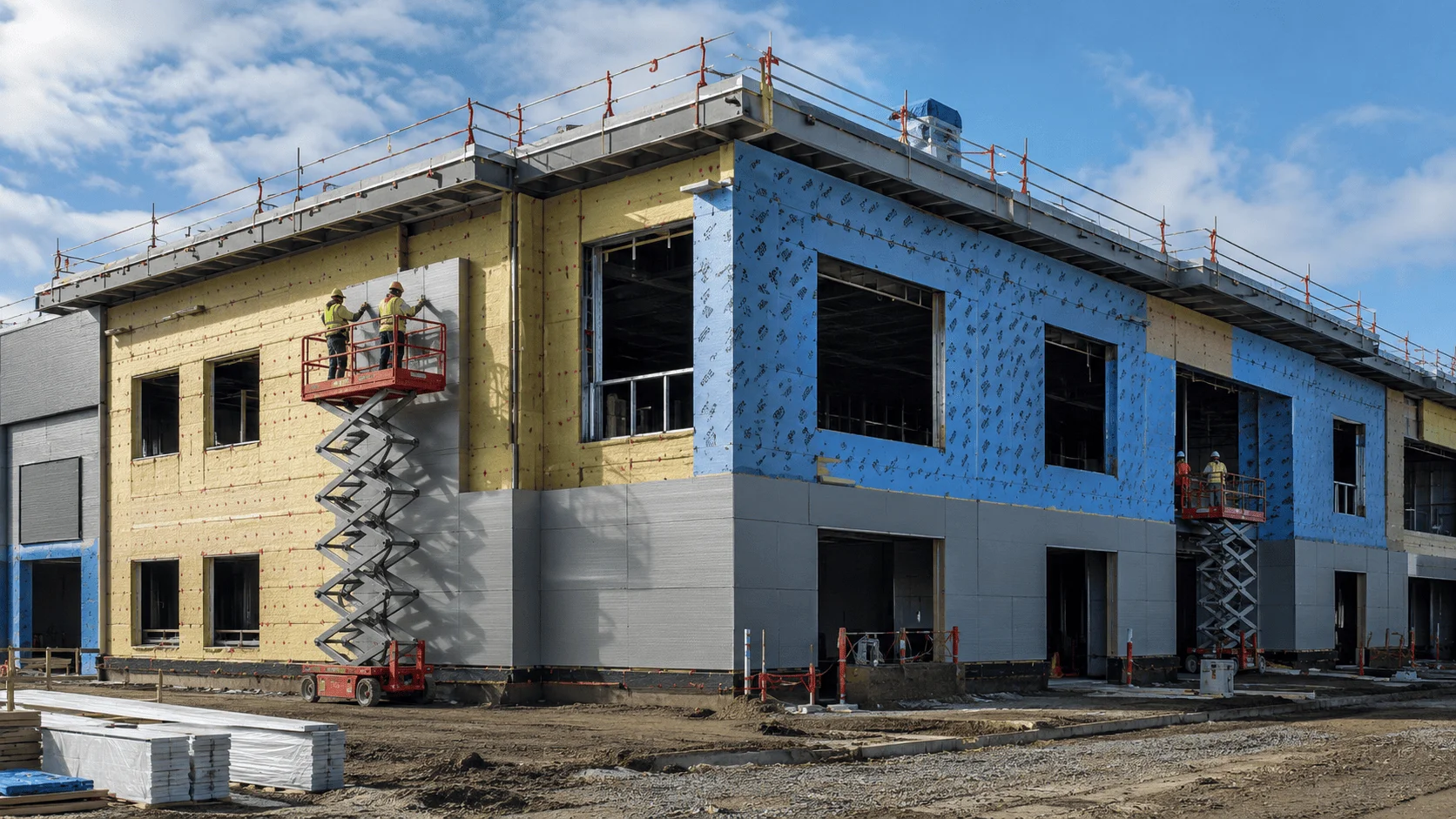
How R-value is set for commercial work
R-value is the assembly's resistance to conductive heat flow, and in South Carolina the commercial energy code fixes a minimum per component by climate zone. The catch is that a strong nominal number can be lost to thermal bridging through steel or studs and to air leakage, so continuous insulation and a real air barrier are specified with it, not instead of it.
The commercial energy code that applies in South Carolina
South Carolina enforces 2009 IECC and ASHRAE Standard 90.1-2007 for commercial work, effective January 1, 2013. Local amendments can still apply, so the edition in force for a specific address is confirmed with the authority having jurisdiction.
| Item | Value |
|---|---|
| State | South Carolina |
| Adopted commercial energy code | 2009 IECC and ASHRAE Standard 90.1-2007 |
| Effective date | January 1, 2013 |
| Climate zone | Assigned by county in the adopted code’s climate zone tables |
| Source | U.S. Department of Energy, Building Energy Codes Program |
| Last verified | August 2026 |
Assembly minimums are published in the adopted code itself, keyed to the climate zone of the building’s county. This guide does not reproduce those tables, because the governing values change with the adopted edition, the county, and any local amendment. Pull them from the edition named above for the project’s county, or ask us to confirm the applicable path during estimating.
Choosing a compliance path
Compliance in South Carolina runs down one of two tracks. The prescriptive route fixes a minimum per assembly and is the simpler path to specify and inspect. The performance route models the whole envelope against an energy target and permits trade-offs between assemblies, which suits buildings that will never fit the table cleanly.
Where the R-value goes in the building
- Roof assemblies. These carry the most demanding number in almost every zone, and above-deck continuous insulation is the normal way to reach it without bridging through the structure.
- Walls. Cavity insulation plus continuous insulation is often needed to meet the path and cut thermal bridging.
- Slabs and floors. Perimeter and under-slab requirements come into play wherever the space below is conditioned or held at temperature.
Climate and code across South Carolina
Hot, humid summers and a long cooling season make moisture control and air-sealing the primary envelope drivers. Across markets such as Charleston, Columbia, Greenville, that places humidity and cooling-load reduction alongside the code minimum. Roof and wall assemblies usually carry the most demanding targets, and continuous insulation over framing is commonly needed to control thermal bridging on South Carolina steel and metal-building stock.
Passing on paper and performing in service are different things. Gaps, compression, and an unsealed transition will quietly cost an assembly much of its rated value, so for South Carolina projects the detailing gets specified alongside the system rather than left to the field.
There is no one R-value for a South Carolina building; it comes from the assembly, the occupancy, and the compliance path in play. We pin that down early and specify the system and thickness to hit it, then put it in a written estimate.
Confirm the code for your project. This is general planning guidance, not a code determination. South Carolina jurisdictions adopt and amend the commercial energy code on their own schedule, so the edition, climate zone, and any local amendments must be verified for the specific building and location. We confirm the applicable path during estimating.
Frequently asked questions
Is a higher R-value always better?+
Not past a point. Beyond code, added R-value has diminishing returns, and air leakage or thermal bridging can undermine a high number. Continuous insulation and air-sealing often matter more than chasing R-value alone.
Does the South Carolina climate change the target?+
Yes. The humid subtropical/coastal climate makes humidity and cooling-load reduction central, which shapes both the code path and the practical system choice for roofs, walls, and metal buildings.
What is continuous insulation and why does South Carolina code call for it?+
Continuous insulation runs unbroken across framing so heat cannot bridge through steel or studs. Commercial codes lean on it because a cavity-only assembly can miss its effective R-value once bridging is counted.
Which South Carolina code edition applies to my building?+
That depends on the jurisdiction and when it adopted the commercial energy code, plus any local amendments. We confirm the applicable edition and climate zone for your project during estimating.
Planning a commercial or industrial project?
Tell us the building type, where it's located, and what you need done. We'll review the details and get back to you.
Prefer to call? (850) 639-9272